Destinations at Risk
Chikungunya has been found in over 110 countries1
Weak surveillance, reporting gaps, and lack of differential testing between other mosquito-borne diseases with similar symptomologies – especially in endemic regions – may contribute to the underreporting of chikungunya cases.4,11,16–18,31
Even with underreporting, over 620,000 cases and 213 deaths were documented worldwide in 2024.12,31,32
| In recent years, destinations popular with UK travellers, like South and South-East Asia, Latin America, plus Africa have been especially affected1 |
Over the past 50 years, the impact of chikungunya has increased dramatically, with outbreaks growing in size, geographic reach and severity, spreading to previously unaffected areas.19,21,33,34
This is partly due to climate change, urbanisation, global travel and viral adaptations, which have accelerated the spreading of Aedes mosquitoes and made regions like Europe and the USA more suitable habitats.19,23,35
Countries with a history of chikungunya transmission2,3,36
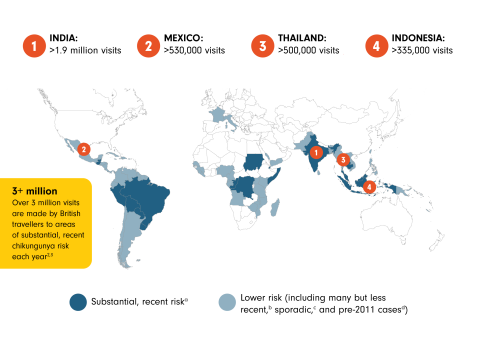
Adapted from Grabenstein, et al. 2023.
aBetween 2019–2022: >1,000 cases, with 2,000–1 million between 2011–2022. b>12,000 cases between 2011–2022, although <1,000 in 2019–2022.
c<7,500 cases between 2011–2022, with <500 in 2019–2022. dCases reported before 2011, but not between 2011–2022.
| Learn more about the prevention of chikungunya – visit the TravelHealthPro* website to find out more |
*This website is not owned or controlled by Bavarian Nordic.
Protection Methods
Chikungunya-carrying mosquitoes typically bite during the day so can be hard to avoid9,10,12
As there is no specific treatment for chikungunya, and managing the disease relies on supportive care to alleviate symptoms,11 helping to protect travellers against chikungunya is especially important.
The Aedes mosquitoes that spread chikungunya are typically active during the day, so only using mosquito nets at night may not be enough to protect travellers.12
Taking further steps to prevent bites during the day can be difficult to implement consistently while travelling.9,10

Repellents9

Wearing long sleeves and trousers9

Screens on doors/windows10
Even travellers seeking guidance often fail to apply adequate, protective amounts of repellents.37
| As such, travellers may benefit from multiple approaches to protection: both by preventing bites and through vaccination38 |
Vaccines are now available to provide an additional level of protection against chikungunya.39,40
Click here to learn about VIMKUNYA®▼Chikungunya Vaccine (recombinant, adsorbed)
VIMKUNYA is indicated for active immunisation for the prevention of disease caused by chikungunya virus in individuals aged 12 years and older. The use of this vaccine should be in accordance with official recommendations.40
Click for VIMKUNYA® Prescribing information